
2026/9/22
According to the General Administration of Customs, in the first eight months of this year, China’s cumulative textile and apparel exports totaled US$203.31 billion, up 3.1% year on year, with the cumulative growth rate widening by 0.7 percentage points from the first seven months. Of this, textile exports reached US$98.03 billion, up 3.7% year on year; apparel exports reached US$105.28 billion, up 2.5%. In CNY-denominated terms, cumulative textile and apparel exports from January to August totaled 1.40 trillion yuan, down 1% year on year, including 676.74 billion yuan worth of textile exports (-0.3% y-o-y), and 725.74 billion yuan worth of apparel exports (-1.6% y-o-y).
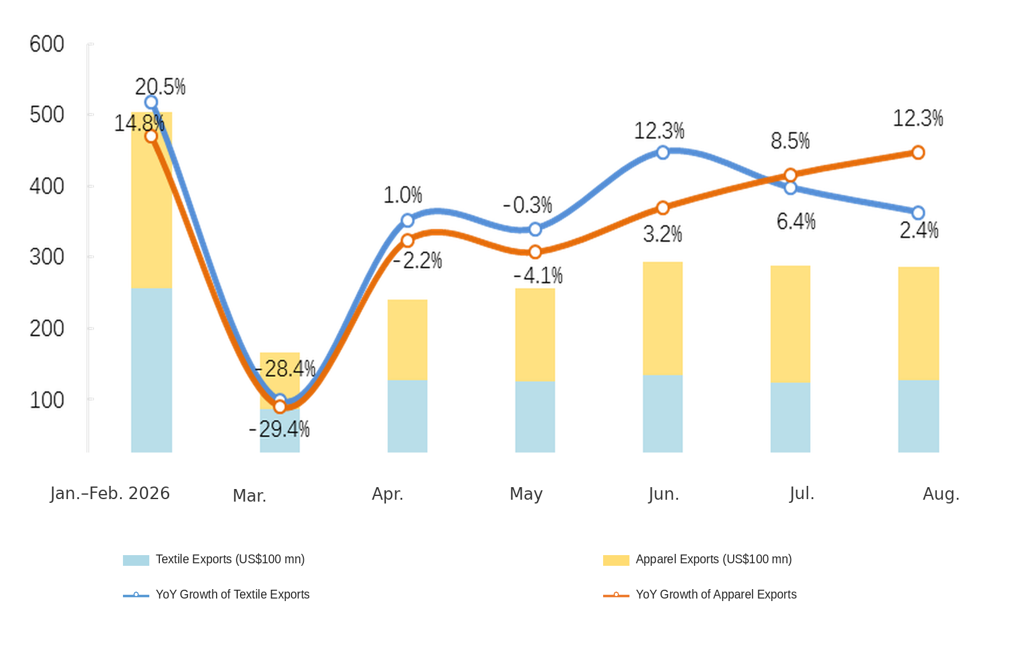
Figure 1 Monthly Statistics of China’s Textile and Apparel Exports
In August alone, China’s textile and apparel exports totaled US$28.57 billion, up 7.7% year on year, with the growth rate expanding by a further 0.1 percentage points from the relatively high level in July. Textile exports in the month reached US$12.69 billion, up 2.4% year on year, with growth easing from the previous month; apparel exports reached US$15.88 billion, up sharply by 12.3% year on year, with the growth rate widening by nearly 4 percentage points from July.
Since the second half of this year, apparel retail performance has diverged markedly across countries. U.S. consumption has shown relatively strong resilience: apparel-store sales rose by about 5% year on year in July, industry destocking was largely completed, and apparel performed strongly within overall retail sales, providing some near-term support for the U.S. market. The EU market has been visibly squeezed by energy spending and lacks consumption momentum, with euro-area retail volume falling 0.6% month on month in July. Japanese household consumption expenditure contracted for an eighth consecutive month, while the decline in apparel spending narrowed to 0.3% from -22% in the previous month. In addition, with high temperatures and high prices suppressing demand, offline apparel sales in South Korea fell 3.2% month on month. The momentum for a subsequent recovery in consumption demand in Europe, Japan and South Korea is therefore relatively limited.
Meanwhile, the international trade environment continues to face considerable uncertainty. Trade-protection measures and tariff adjustments continue to disrupt export orders, while fluctuations in the RMB exchange rate further increase pressure on corporate profits and cost control. Looking ahead, textile exporters are advised to strengthen tracking and assessment of policy developments and demand trends in key markets and actively mitigate risks from exchange-rate and freight-cost fluctuations. At the same time, they should seize structural opportunities arising from the upgrading of domestic consumption, optimize product portfolios and sales channels, enhance order value added and delivery stability, coordinate domestic and overseas market deployment, and strengthen overall risk resistance and development resilience.
Source: CHINA TEXTILE LEADER Express


Authority in Charge: China National Textile and Apparel Council (CNTAC)
Sponsor: China Textile Information Center (CTIC)
ISSN 1003-3025 CN11-1714/TS

© 2026 China Textile Leader, all rights reserved.
Powered by SeekRay